Today, 11 June 2026, we mark eleven years since the death of Jenny
Jenny was a bright, caring young girl who dreamed of becoming a doctor. According to her family, she developed symptoms consistent with electromagnetic hypersensitivity (EHS), a condition in which people report adverse health effects associated with exposure to electromagnetic fields and wireless technologies.
Her mother repeatedly sought help and understanding. Instead, she believes Jenny’s concerns were dismissed.
Today, as societies continue to expand digital connectivity into every aspect of daily life, Jenny’s story remains a powerful reminder that families who raise concerns about their children’s health deserve to be heard.
A Wireless Environment Few Can See, But Many Now Question
We now live in an environment of constant wireless connectivity. Radiofrequency electromagnetic fields are emitted by Wi-Fi routers, mobile phones, cordless phones, tablets, smart meters, wearable devices, phone masts, and 2G, 3G, 4G and 5G networks. These systems are embedded in homes, schools, hospitals, workplaces, and public spaces, forming an invisible environment that most people rarely stop to consider.
EHS is a term used to describe symptoms such as headaches, sleep disturbance, dizziness, heart palpitations, anxiety, and other neurological or physiological effects that some individuals report in relation to electromagnetic field exposure.
For the families living with these experiences, this is not abstract or theoretical. It is daily life, and for some it is profoundly distressing.
Jenny’s family raised concerns about her wellbeing in relation to her school environment. They believed she was reacting to wireless exposure and needed understanding and protection. They felt those concerns were not taken seriously at the time. Over time, Jenny’s story became part of a wider and ongoing conversation about how we care for children in an increasingly connected world.
Jenny tried to cope in the only ways she could. She looked for quiet spaces. She tried to avoid wireless exposure where possible. She worked alone when she needed to. But more than anything, she wanted to feel safe in the place where she was meant to learn and belong.
Her mother, Debra Fry, kept speaking up for her, raising concerns again and again. But instead of protection, there was dismissal. Instead of answers, there was silence. And Jenny was left feeling increasingly isolated.
One of her final diary entries reflects that pain
“I have no hope for humanity… I’m insignificant, an insignificant number on someone’s screen.”
Further information about Jenny’s story can be read here
https://radiationresearch.org/jenny-fry-a-15-year-old-schoolgirl-who-sadly-took-her-own-life-in-2015/
Those words stay with people because they speak to something far deeper than technology. They speak to the experience of feeling unseen and unheard.
Jenny’s Voice and Her Mother’s Words
Jenny was never insignificant. She mattered then. She matters now. And she will not be forgotten.
Reflecting on those years, Jenny’s mother Debra says:
“Jenny was such a happy child. Watching her struggle was heartbreaking. As her mother, I tried to raise concerns and seek help, but I felt our voices were not being heard. Eleven years later, I still ask how many children and families must suffer before concerns are properly listened to and independently investigated. If Jenny’s story can help protect even one child, then her voice must not be forgotten.”
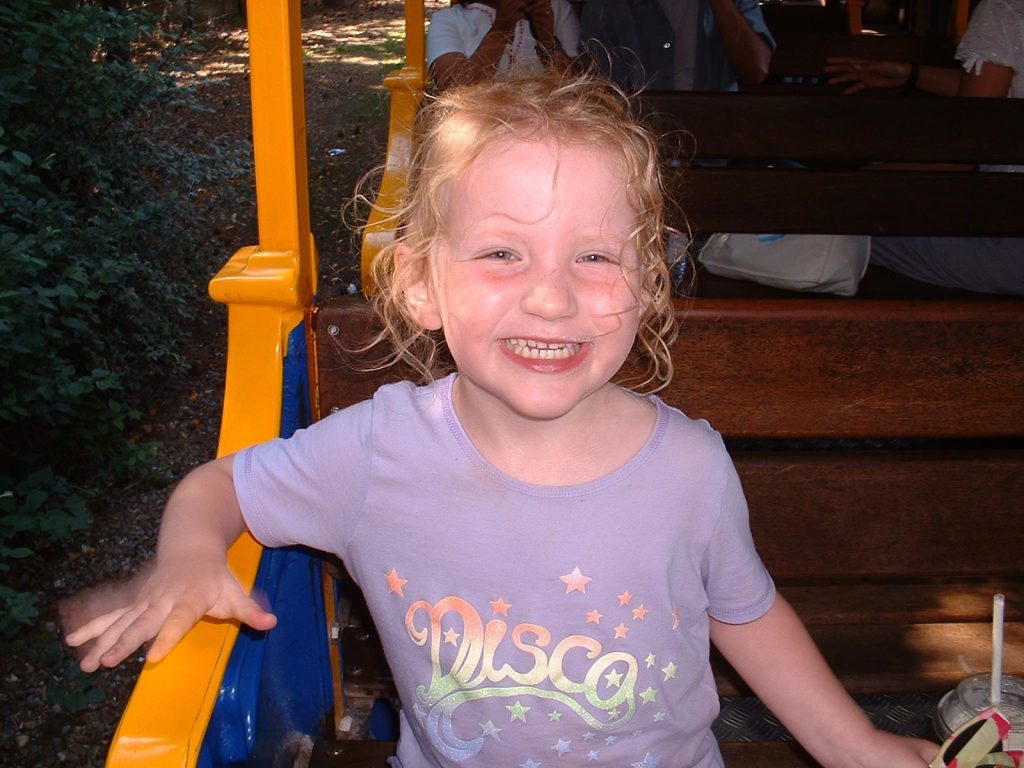
Jenny, remembered in her younger days
Image shared with permission from her family
A Quietly Growing Conversation About Children’s Wellbeing
Around the world, more people are beginning to ask difficult questions about the environment in which children are growing up.
Much of the current debate focuses on online safety, social media, screen time, mental health, and digital harms. This is important, but it is only part of the picture.
Children today live in a constant state of connectivity. Wireless technologies are woven into classrooms, homes, and public spaces, yet the physical environment created by this connectivity is rarely discussed in wider safeguarding or public health conversations.
One reason these concerns continue to be raised is that children’s bodies and nervous systems are still developing, and scientific studies have demonstrated that they absorb radiofrequency radiation differently from adults. Dosimetric modelling referenced in the International Agency for Research on Cancer (IARC) Monograph on Radiofrequency Electromagnetic Fields reported that children experience higher absorption levels in certain tissues and organs than adults, including parts of the brain and skull bone marrow. Further information can be found in the EM Radiation Research Trust article, “Up to 10x More Radiation: Are Our Children the Unseen Victims of Wireless Technology?”: https://radiationresearch.org/up-to-10x-more-radiation-are-our-children-the-unseen-victims-of-wireless-technology/
The question for many families is not abstract. It is whether enough independent attention is being given to those who are affected, and whether their experiences are being properly understood.
At the heart of these concerns is something very simple. Trust.
Parents want clear, honest, independent information. They want to be able to ask questions without being dismissed. And they want to feel confident that decisions affecting their children are being made transparently, with their wellbeing at the centre.
A Case That Has Never Left People’s Minds
Jenny Fry’s story remains one of those cases that does not fade.
Since her death, her story has continued to be spoken about by families, campaigners, and researchers who believe that the experiences of people reporting sensitivity to electromagnetic exposure deserve greater attention, compassion, and care.
In 2022, a UK child was awarded an Education, Health and Care Plan following tribunal proceedings brought by the child’s parents in a case involving accommodations related to electromagnetic hypersensitivity. The case demonstrated that in individual circumstances, concerns relating to EHS can be considered within formal UK education support systems. https://phiremedical.org/education-health-care-plan-ehcp-awarded-aug-2022-for-uk-child-on-the-basis-of-electromagnetic-hypersensitivity-ehs/
Government and public health bodies continue to rely on international exposure guidelines developed by ICNIRP, as adopted in UK Health Security Agency guidance. These guidelines have been widely debated, with independent researchers and campaigners arguing that they focus primarily on short term thermal effects while giving less weight to other reported biological effects and non thermal research.
For many families, this remains a point of concern. The gap between official reassurance and lived experience.
A 2025 peer reviewed paper by Denis Henshaw and Alasdair Phillips, titled “A mechanistic understanding of human magnetoreception validates the phenomenon of electromagnetic hypersensitivity (EHS)”, proposes a biological framework that may help explain reported sensitivity in some individuals. Free to download: https://www.tandfonline.com/doi/full/10.1080/09553002.2024.2435329
A Call for Something More Human
Children are growing up in a world that is very different from the one that came before. Constant connectivity is now part of everyday life, but that does not always mean it is fully understood.
A meaningful approach to child protection has to go beyond screens and content. It has to include the environments children live in, the pressures they experience, and the importance of listening when families raise concerns.
At its heart, this is not only a technical issue. It is a human one.
Jenny’s story reminds us what can happen when a child feels unheard for too long.
A Final Call to Action
As we mark eleven years since Jenny Fry’s death, we pause to remember her not as a case or a debate, but as a young girl who wanted to feel safe, understood, and able to learn like everyone else.
We encourage those who feel moved by Jenny’s story to add their voice to calls for safer environments for children. You can support the Children’s Declaration and sign the petition here:
https://www.thechildrensdeclaration.org/become-a-signatory
The Children’s Declaration sets out a clear principle that strengthens the responsibility we all share in relation to children’s wellbeing and protection. It affirms that the legal duty to protect children and to uphold and enforce their rights on their behalf rests with all adults, particularly parents, legal guardians, and others in positions of authority. It recognises that this protection of children is a basic legal and moral principle that is increasingly understood as forming part of international customary law, capable of recognition and implementation by every country.
Within this framework, children’s health and development must be safeguarded not only in relation to content and online safety, but also in relation to the environments they are placed in and exposed to.
This includes growing concerns raised by families and researchers regarding Screen Time Addiction, Involuntary Exposure to Non Ionizing Radiation (NIR), and the Commercial Exploitation of children through constant digital engagement and dependency driven systems.
We also encourage readers to write to their Member of Parliament and call for independent investigation, greater transparency, and stronger protections for children in relation to the health impacts of wireless technologies.
The lessons her story leaves behind are simple, but profound
🕊️ Listen, really listen, to those who are struggling
🕊️ Take parental concerns seriously, even when they are difficult to hear
🕊️ Where uncertainty exists, err on the side of caution
🕊️ No child should ever feel invisible
Jenny’s death changed the lives of those who loved her and continues to raise profound questions about how society responds when children and families report harm. Eleven years later, those questions remain.
As societies continue to expand digital connectivity into every corner of daily life, the experiences of families reporting adverse effects from wireless technologies must be properly heard, independently examined, and treated with seriousness and care.
The responsibility to protect children must include the full reality of their environment at home, in schools, and in public spaces where they live, learn and grow.
If Jenny’s story helps to encourage greater awareness, precaution, and care, then her legacy continues where it matters most in the protection of children today and tomorrow.
Jenny Fry
3 October 1999 to 11 June 2015
In loving memory
Eileen O’Connor
Director
EM Radiation Research Trust
https://radiationresearch.org/